
What is Fashion Law and Why It Matters in India?
Fashion is an expression of creativity in various forms. Laws that are formed to protect designers, artists, wholesalers, and brands come under fashion law. Fashion law is a niche area of law that showcases a blend of various kinds of laws, including Contract Law, Consumer Protection Laws, and most importantly, Intellectual Property Laws. As we see, the fashion industry in India is growing rapidly. But did you know that this industry has been an important part of our society and economy since ancient times? During the Indus Valley Civilization, evidence of cotton weaving and natural dyeing was found, showing that Indian fashion has evolved through centuries of craftsmanship. During the Mughal era, Indian fashion witnessed a significant transformation with the introduction of luxurious fabrics like silk, brocade, and muslin, along with elaborate embroidery styles such as zardozi.
The colonial period influenced Indian fashion by introducing Western styles, tailoring techniques, and factory-based textile production, while Indian textiles gained global recognition. Post-independence, in the late 20th century, the rise of fashion designers, fashion weeks, and organized retail came. Today, India’s fashion industry is a dynamic blend of heritage and innovation. As developments are taking place rapidly, there is a need to protect designs, ideas, business practices and ensure fair competition. This has paved the way for the emergence of fashion law in India.Intellectual Property Rights in Fashion
Intellectual Property Rights form the backbone of the fashion industry. They play a crucial role in protecting designs, brand identity, and creative ideas from being copied without permission. Rights such as trademarks, copyrights, and patents help designers and brands secure their work. For instance, well-known fashion houses like Louis Vuitton and Gucci rely on trademark law to protect their logos, brand names, and signature patterns. In the same way, copyright law safeguards original prints, sketches, and artistic designs created by designers. These rights also help brands build stronger marketing strategies and enhance their reputation in the market. In today’s highly competitive global fashion industry, standing out requires not only creativity but also strong legal protection. International registration of Intellectual Property Rights gives brands an edge when they expand beyond national borders, ensuring that their designs and identity remain protected worldwide. Building and strategically managing a brand’s image is essential for every organisation. Intellectual property assets must be properly identified, protected, and monetised so that brands can grow and adapt with changing trends and times.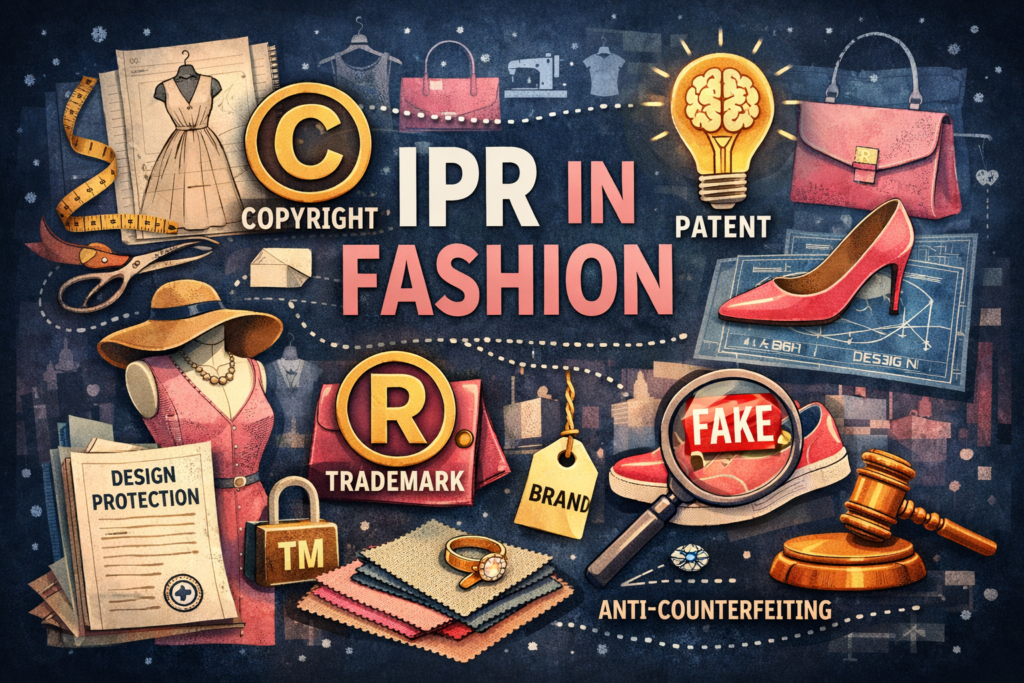
Counterfeiting and Legal Protection in India
Counterfeiting refers to the act of making something appear identical or substantially similar to an original product with illegal or dishonest intent. It is a widespread problem across the globe, ranging from copying a brand’s product design to even counterfeiting a country’s currency. All such acts fall under the umbrella of counterfeiting, and eliminating it from the global market is nearly impossible. According to Black’s Law Dictionary, counterfeiting is defined as the act of producing or selling an item that closely resembles a trademarked product, with the intention of deceiving consumers into believing that they are purchasing genuine goods. In India, various laws exist to protect individuals and businesses from such unlawful practices:- Trade Marks Act, 1999: In the fashion industry, trademarks protect brand names, logos, labels, and symbols that help consumers identify original products. When counterfeiters sell clothes, bags, or accessories using a copied or deceptively similar brand name or logo, it amounts to trademark infringement. Selling fake designer handbags or clothes with copied brand logos can lead to injunctions, damages, and even criminal punishment.
- Copyright Act, 1957: Copyright law protects original artistic works such as fashion sketches, prints, embroidery designs, and illustrations. Copying a designer’s original artwork without permission is considered copyright infringement. If a fast-fashion brand copies a unique textile print or runway artwork created by a designer and reproduces it on garments, the designer can take legal action.
- Designs Act, 2000: The Designs Act protects the visual appearance of fashion products like clothing, footwear, jewellery, and accessories, provided the design is registered. It focuses on how a product looks, not how it works. If a registered dress pattern, handbag shape, or jewellery design is copied by another manufacturer, the original designer can file a suit for design piracy.
- Geographical Indications Act, 1999: This Act protects traditional and region-specific fashion products that are known for their geographical origin and craftsmanship. It prevents the misuse of names associated with such products. Selling machine-made sarees as Banarasi silk or falsely claiming a product to be Kanchipuram silk amounts to infringement.
- IPR (Imported Goods) Enforcement Rules, 2007: These Rules help stop counterfeit fashion goods from entering India through imports. Customs authorities can suspend and seize goods that infringe intellectual property rights. A shipment of fake branded shoes, watches, or clothing imported from another country can be stopped and destroyed.
- Drugs and Cosmetics Act, 1940: Fashion and beauty often go hand in hand. This Act protects consumers from spurious and fake cosmetics that may cause serious health risks. Selling counterfeit makeup or beauty products using the name of a popular brand can result in strict punishment.
- Bharatiya Nyaya Sanhita: General criminal laws apply where counterfeiting involves fake currency, forged labels, tags, seals, or packaging used in fashion products. Using fake brand tags, labels, or holograms on counterfeit clothes or accessories can attract criminal liability.
Labour and Consumer Protection in the Fashion Industry
India’s fashion industry is highly labour-intensive, especially in spinning, weaving, and garment manufacturing sectors. This industry heavily relies on workers, many of whom are employed in the informal sector. To protect their rights, several laws are present in India, such as: The Factories Act, 1948: It plays the role of regulating working conditions in garment and textile factories. It lays down provisions related to health, safety, working hours, etc. Minimum Wages Act, 1948: It aims to ensure that workers receive a fair amount for their labour. This helps in preventing exploitation by mandating minimum wage standards. Despite these laws, the Indian fashion industry is often criticized for poor labour practices, particularly in the informal sector. Issues such as the absence of written contracts, lack of social security benefits, long working hours, and weak enforcement mechanisms highlight a significant gap between the existing labour laws and their effective implementation. Consumer protection laws play a crucial role in the fashion industry as they ensure the buyer’s safety and that they are not misled. With the rapid growth of fashion brands and the online world, the need to protect consumers’ rights is also growing rapidly. Some laws that protect and safeguard consumers are: The Consumer Protection Act, 2019: It provides consumers with remedies against unfair trade practices, misleading advertisements, defective products, and deficiencies in services. The Consumer Protection (E-Commerce) Rules, 2020: It addresses issues arising from online fashion retail. These require transparency from e-commerce platforms regarding product details, return policies, seller information, and advertisements, thereby holding online fashion retailers accountable. Consumers can file complaints against brands, retailers, or online platforms for selling poor quality goods or engaging in misleading marketing practices. These laws promote transparency, fairness, and accountability, ensuring that consumers’ trust is not compromised in the greed of profit. Together, these laws ensure that the fashion industry does not grow at the cost of workers’ dignity or consumer’s trust, reinforcing the ethical foundations of fashion law in India.

Great summary of how fashion law is integral to the modern indian fashion industry!
Great 👍